You brush. You floss, most days. You have not had a cavity in years and then, out of nowhere, your next checkup turns up two. It is one of the more frustrating moments in dentistry: the surprise cavity that seemed to appear overnight, even though decay almost never actually works that way.
That gap between how decay actually develops and how late it tends to get caught is exactly what a growing number of dental offices are trying to close with the help of artificial intelligence. A trusted dentist reviewing your history alongside AI-assisted pattern recognition can often flag risk long before a cavity is visible to the eye or shows up on a standard X-ray. Patients at our Odessa dental office, for example, are increasingly asking how this kind of forward-looking screening actually works and whether it means fewer surprises at future visits.
What “AI Cavity Risk Prediction” Actually Means
| Did You Know? A cavity risk score is not a diagnosis. It is a way of organizing your fluoride exposure, saliva flow, diet, and dental history into a single picture your dentist can act on early. |
At its core, AI cavity risk prediction is software that reviews patterns across your dental history – previous fillings, gum health, saliva flow, diet notes, fluoride use, and imaging to estimate how likely tooth decay is to develop over the coming months. It does not replace a clinical exam. It gives your dentist a second, data-driven perspective to weigh alongside direct observation of your enamel, bite alignment, and gum tissue.
Cavity risk assessment itself is not new; dentists have long factored in diet, dry mouth, and hygiene habits when deciding how often a patient should be seen. What AI-assisted dentistry adds is the ability to weigh many of those factors at once, consistently, across every visit – rather than relying on memory of what was discussed two cleanings ago.
Why This Matters for Your Oral Health
Tooth decay is progressive. Left alone, it moves from a weak spot in the enamel to a cavity that reaches the deeper structure of the tooth, and eventually to pain, infection, or the need for a root canal or crown. Catching that process earlier – while a fluoride treatment or a change in diet can still reverse it is the entire goal of any risk assessment, AI-assisted or not.
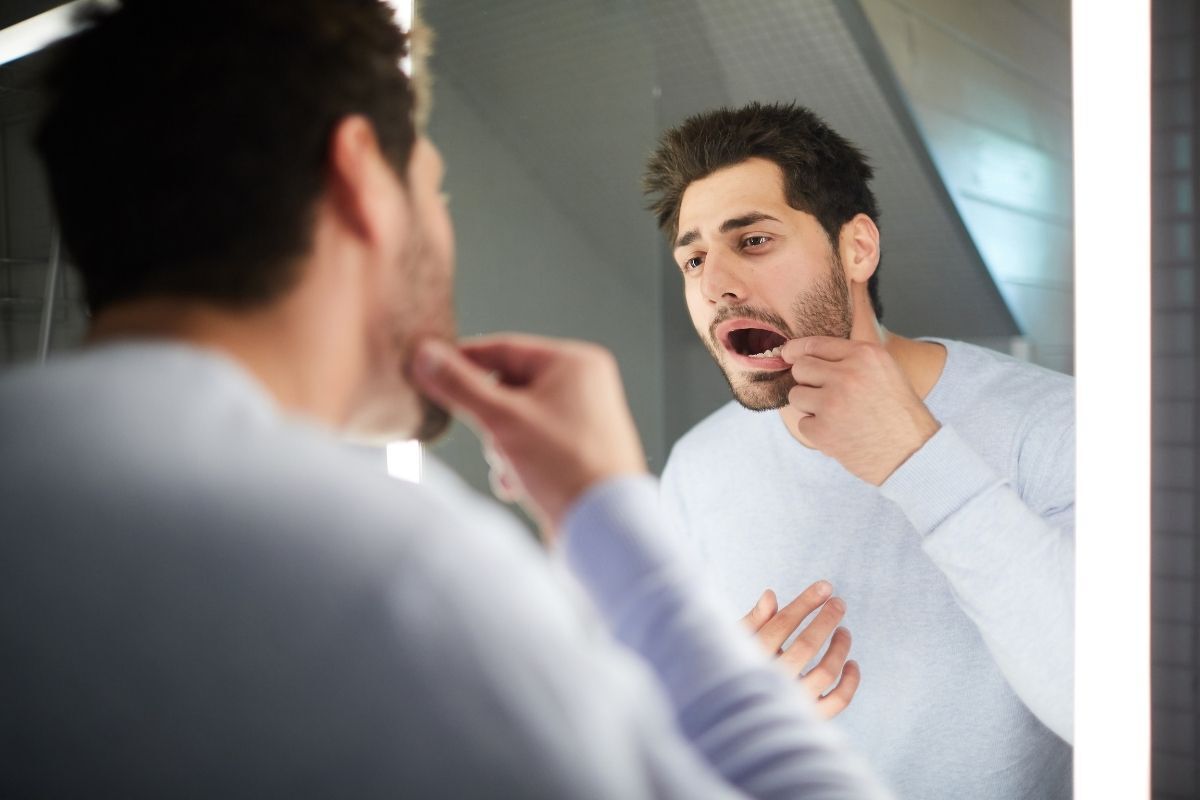
Tooth decay is progressive. Left alone, it moves from a weak spot in the enamel to a cavity that reaches the deeper structure of the tooth, and eventually to pain, infection, or the need for a root canal or crown. Catching that process earlier – while a fluoride treatment or a change in diet can still reverse it – is the entire goal of any risk assessment, AI-assisted or not. A simple morning check can also help you notice changes that deserve a closer look before they become bigger dental problems.
The Real Risks of Waiting
- Silent progression: Early enamel demineralization rarely causes pain, so it is easy to miss until decay is already established.
- Compounding costs: A small cavity caught early may need only a filling; the same decay left untreated can mean restorative dentistry like a crown or root canal.
- Uneven risk factors: Dry mouth, orthodontic appliances, and certain medications can quietly raise your caries risk even when your brushing habits have not changed.
How an AI-Assisted Risk Assessment Compares to a Traditional Exam
Neither approach replaces the other — they work best together. Here is a side-by-side look at what each brings to a checkup.
| Factor | Traditional Exam | AI-Assisted Assessment |
|---|---|---|
| What it looks at | A snapshot: visible decay, X-rays, patient history at that visit | Continuous pattern-matching across history, imaging, diet notes, and prior treatment |
| When it flags risk | Usually after early signs are already visible | Can surface elevated risk before a cavity is visible to the eye |
| Who makes the call | The dentist, using training and clinical judgment | The dentist — AI output is one input, never the final word |
| Best used for | Diagnosing a cavity that already exists | Prioritizing prevention and shaping a personalized care plan |
⭐⭐⭐⭐⭐ Ashley | Bliss Dental & Orthodontics – Odessa
Friendly staff! Very welcoming, fast, & helpful dentist office. My 4 year old was very comfortable with doctor Yad.
What Goes Into a Personalized Risk Picture
A meaningful cavity risk assessment pulls from several categories at once, since no single factor tells the whole story:
- Saliva and dry mouth: Saliva helps neutralize acid and rebuild enamel, so reduced flow raises risk.
- Diet: Frequency of sugar and acid exposure often matters more than total amount.
- Fluoride exposure: Toothpaste, water source, and in-office treatments all factor into the picture.
- Dental history: Past fillings or crowns are one of the strongest predictors of future risk.
- Home hygiene: Consistency of brushing and flossing shapes both current and future oral health.
- Imaging: Dental imaging over time can reveal patterns a single visit would not show.
Diet: Frequency of sugar and acid exposure often matters more than total amount. Everyday foods and drinks that seem harmless can expose teeth to repeated acids and sugars, gradually increasing decay risk without causing immediate symptoms. Understanding which foods may be quietly affecting your teeth can help you make smarter choices between checkups.
Expert Tips: Making the Most of a Risk-Based Approach
A risk score is only useful if it leads somewhere. In practice, that means turning the data into a plan you can actually follow between visits. Many patients across our Midland location have found that a short conversation about their specific risk factors – rather than generic advice – makes the daily habits easier to stick with.
One of the most useful things you can do is ask your dentist what your personal risk factors mean for your teeth and what you can change before a problem develops. Knowing the right question to ask at your next appointment can sometimes be just as valuable as knowing your risk score.
⭐⭐⭐⭐⭐ William Cook | Bliss Dental and Orthodontics – Midland
I was pleased with the service , I was treated with respect! Thank you ‘all.
Practical Steps Patients Can Take
- Ask for your risk factors, not just your score: Knowing why your risk is elevated makes the recommended changes easier to prioritize.
- Match your recall interval to your risk: Higher-risk patients often benefit from cleanings closer together than the standard six months.
- Treat dry mouth as a risk factor, not just a discomfort: Mention any medications or conditions that affect saliva flow.
- Keep your imaging current: Dental imaging gives both your dentist and any AI-assisted tool more to work with over time.
Frequently Asked Questions
1. What is AI cavity risk prediction?
AI cavity risk prediction uses software to review patterns in your dental history, imaging, and daily habits to estimate how likely you are to develop a cavity, so your care team can focus on prevention rather than waiting for decay to appear.
2. Is AI replacing the dentist’s judgment?
No. AI tools organize and flag patterns in your data, but a licensed dentist still reviews the findings, examines your mouth directly, and decides on any treatment or preventive plan.
3. What factors go into a cavity risk score?
Common inputs include fluoride exposure, saliva flow, diet, dry mouth, prior cavities, home dental hygiene, and imaging from past visits. These factors are combined to build a fuller picture than any single factor alone.
4. Can AI find cavities that X-rays miss?
AI-assisted imaging review can help highlight subtle shading or patterns that may be easy to overlook, but it works alongside—not instead of—a dentist’s direct exam and standard dental imaging.
5. Does a high risk score mean I already have a cavity?
Not necessarily. A higher score means your risk factors suggest closer monitoring and possibly earlier preventive steps, such as a fluoride plan or shorter recall interval. It does not confirm that tooth decay is already present.
6. How often should cavity risk be reassessed?
Most patients can benefit from having their risk reviewed during routine dental visits, since diet, saliva flow, hygiene habits, and other risk factors can change over time.
7. Is this kind of assessment covered by insurance?
Coverage varies by insurance plan and by the specific services involved. It is worth asking your dental office to check your benefits before your visit.
8. Who is a good candidate for AI-assisted risk screening?
Patients with a history of cavities, dry mouth, orthodontic appliances, or gaps between dental checkups may benefit from a closer look at their individual risk. However, any patient interested in a more personalized preventive care plan can ask their dentist whether AI-assisted screening is appropriate.